
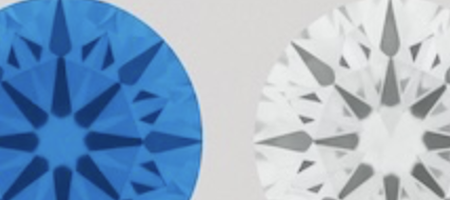
When most people think about buying a diamond, the “4Cs”—carat, cut, color, and clarity—come to mind. Jewelers and diamond experts have been using this framework for decades to help explain quality and value. But here’s the secret: while the 4Cs are essential, they don’t tell the whole story.
Much like judging a painting by its frame, stopping at the 4Cs means you might miss what makes one diamond truly exceptional compared to another of the same grade. Let’s go beyond the basics and explore the subtler details that can make or break a diamond’s beauty—and its price tag.
Cut Precision: Where Craftsmanship Shines
Two diamonds may both be labeled “Excellent Cut,” but they can look very different in person. That’s because precision matters.
- Symmetry & Proportions: A diamond that’s just a hair off in symmetry may leak light instead of reflecting it back, appearing less lively.
- Polish Quality: Fine polishing creates mirror-like facets that maximize sparkle.
- Hearts & Arrows: Some round diamonds reveal this kaleidoscopic pattern under magnification—a hallmark of meticulous craftsmanship.
Clarity Patterns: Personality in Every Stone
Clarity grades like VS2 or SI1 tell you how many inclusions a diamond has—but not what they look like.
- A tiny crystal off to the side may be virtually invisible.
- A feather inclusion under the table facet can affect both beauty and durability.
- Clouds of microscopic inclusions might make a diamond look hazy, even if the grade seems “good.”
Think of clarity like a fingerprint—no two diamonds are exactly alike.
Light Performance: The Sparkle Factor
We all want a diamond that dances with light. That’s where brilliance (white sparkle), fire (flashes of rainbow color), and scintillation (the twinkle as it moves) come in.
Even within the same cut grade, some diamonds perform better than others. Tools like the Ideal-Scope or ASET reveal how well a stone handles light—and why one may look dull next to another.
Fluorescence: Friend or Foe?
Some diamonds glow under UV light, a phenomenon called fluorescence. For years, buyers avoided it, fearing it lowered value. In reality, it depends:
- Strong fluorescence can sometimes make a diamond look hazy.
- But faint to medium fluorescence in lower-color diamonds can actually make them appear whiter in daylight.
Shape Appeal: Not All Ovals Are Equal
Shape isn’t just a matter of preference—it also affects value.
- Ovals, pears, and marquises can show the dreaded bow-tie effect (a dark shadow across the middle).
- A round diamond may be “perfect” on paper, but if the proportions are slightly off, it may appear too flat or too deep.
- Length-to-width ratios can make the same shape look elegant—or awkward.
Origin, Treatments & Certification
Today’s buyers also consider where and how a diamond was created.
- Natural vs. Lab-Grown: Both sparkle beautifully, but their long-term value differs.
- Treatments: Procedures like fracture filling or HPHT (high-pressure, high-temperature) can alter a diamond’s appearance—but typically reduce its value.
- Certification: A GIA report is the gold standard. Other labs may be more lenient, which can mislead buyers about quality.
Market & Emotional Value
Finally, value isn’t just about science—it’s about rarity, fashion, and even sentiment.
- Certain combinations—like a high-color emerald cut—are harder to find, so they command premium prices.
- Taylor Swift’s engagement ring set off a tsunami of desire for elongated oval and cushion shapes.
- Fashion trends can boost demand, as we’ve seen with the recent surge in oval-shaped engagement rings.
- And of course, the personal story behind a diamond—whether it’s an heirloom or a symbol of new beginnings—adds a kind of value that can’t be measured on any chart.
The Bottom Line
The 4Cs are a great starting point, but they’re just the tip of the iceberg. A diamond’s true value lies in the nuances of craftsmanship, light, and individuality. When buying or appraising, don’t just look at the numbers—look at the diamond itself.
And if you ever feel overwhelmed, remember: a trained gemologist can help you navigate these subtleties and ensure you find a stone that’s as unique and brilliant as the story it represents.