
It can be surprising—and sometimes unsettling—when two qualified appraisers assign different values to the same piece of jewelry. Many people assume one must be right and the other must be wrong. In reality, that is not always the case.
Jewelry appraisal is not just about identifying a diamond, weighing gold, or estimating what something might sell for. A proper appraisal depends on the intended use of the report, the effective valuation date, the research performed, and the market selected. Change any one of those factors, and the value conclusion may change as well.
That does not mean appraisal work is arbitrary. It means value must be tied to the purpose of the assignment.
What You Will Learn
- Why two qualified appraisers may give different values for the same piece
- How intended use affects value conclusions
- Why the valuation date matters
- How research can influence the final opinion of value
- Why market selection is critical in jewelry appraisal
- When different values are reasonable—and when they deserve a closer look
The Same Piece, Different Questions
When clients compare two appraisals, they often focus only on the bottom-line number. But the better question is:
What question was each appraiser trying to answer?
A jewelry appraisal is not just a description of an item—it is an opinion of value developed for a specific purpose. If two appraisers are solving different valuation problems, different values may be completely appropriate.
For example, an appraisal prepared for insurance replacement will often be different from one prepared for estate settlement, equitable distribution, charitable donation, or liquidation. The jewelry has not changed, but the assignment has.
1. Intended Use Matters
The first thing a qualified appraiser should determine is the intended use of the appraisal.
Insurance Replacement
If the goal is to insure the jewelry, the assignment is often to estimate the cost to replace the piece with one of like kind and quality in an appropriate retail market. That value may reflect a new replacement in a traditional jewelry store, a custom recreation, or another suitable replacement source.
Fair Market Value
If the jewelry is being valued for estate work, tax reporting, or certain legal matters, the relevant definition may be fair market value. This is not the same as replacement cost. It reflects a different kind of market and a different kind of transaction.
Liquidation or Resale
If the client wants to know what they could reasonably expect to realize by selling the item, the appraiser may need to consider liquidation or resale conditions. This value is often lower than insurance replacement value because the market and selling conditions are different.
So yes, two qualified appraisers could assign different values to the same ring if one is valuing it for insurance replacement and the other is valuing it for fair market value or liquidation.
2. Valuation Date Can Change Everything
Every appraisal should have an effective date of value. That matters because jewelry markets change.
Gold and platinum prices move. Diamond prices shift. Colored stone markets can rise or soften. Consumer demand changes. Availability changes. Retail markups change. Auction results change.
A ring appraised in one year may merit a different value in another year even if the piece itself is exactly the same.
For example:
- A diamond appraisal from several years ago may not reflect today’s diamond market
- A colored gemstone may be worth more if fine material has become scarcer
- A value conclusion during a period of high precious metal prices may differ from one developed during a softer market
Two appraisers working at different times may both be correct for their respective effective dates.
3. Research Makes a Difference
Appraisal is not guesswork. It is research-based professional work.
Two experienced appraisers may agree on the identity of a piece but differ in the research they perform or the comparable data they find. One may uncover additional facts that influence value.
For example, one appraiser may recognize that a piece is:
- Signed by an important maker
- A desirable period example, such as Art Deco or Mid-Century
- Better made than first assumed
- Associated with a market niche that commands a premium
- More desirable because of provenance, rarity, or quality of design
Another appraiser may focus more narrowly on gem and metal content and may not assign the same importance to period, maker, or collector appeal.
This is why the depth and quality of research matter. A thorough appraiser may examine current retail offerings, dealer inventories, auction results, market comparables, gemstone pricing sources, and other relevant data before arriving at a conclusion.
4. Market Selection Is Critical
One of the most important reasons values differ is market selection.
Jewelry can trade in several different markets, including:
- Traditional retail jewelry stores
- Estate jewelry dealers
- Auction houses
- Private-sale markets
- Manufacturer or trade markets
- Scrap or refining markets
Each of these markets may produce a very different number.
An antique diamond ring, for instance, may have one value in an upscale retail replacement market, another in the estate market, and another in a liquidation setting. A signed designer piece may bring a strong premium in the right collector or auction market but not in a basic buyout situation.
A competent appraiser must choose the market that matches the purpose of the assignment. If two appraisers select different appropriate markets for different intended uses, their values may differ substantially.
5. Reasonable Differences vs. Red Flags
Not every difference is a problem.
Small or moderate differences may simply reflect reasonable professional judgment, slightly different market data, or different but appropriate sources of comparison. Jewelry valuation is not a mathematical formula with only one possible answer.
However, very large differences may deserve closer review—especially if both reports claim to be for the same intended use and effective date.
Questions worth asking include:
- Were both appraisers valuing the item for the same purpose?
- Did both use the same effective date?
- Did both identify the stones and materials correctly?
- Did both accurately describe condition, quality, and workmanship?
- Did both consider the same relevant market?
- Did one appraiser overlook design, maker, period, or provenance?
If the assignment conditions are truly the same and the values are still dramatically different, a review of the appraisal methodology may be appropriate.
A Practical Example
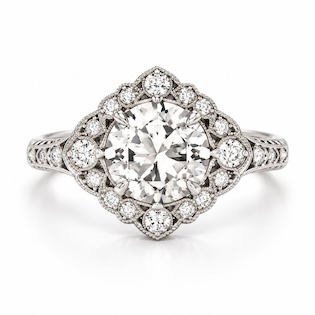
Imagine an antique platinum diamond ring.
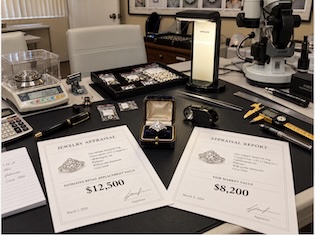
One appraiser is asked to prepare an insurance replacement appraisal and concludes the value is $12,500 based on appropriate retail replacement research.
Another appraiser is asked to estimate fair market value for estate purposes and concludes the value is $8,200 based on that market and definition of value.
These two figures are not necessarily contradictory. They may both be entirely reasonable because they answer different questions.
View a Sample Appraisal Report
Wondering what a professional jewelry appraisal looks like?
You can view my sample report here:
View My Sample Jewelry Appraisal Report
This sample shows how jewelry descriptions, gemstone information, photographs, and value conclusions are documented in a professional appraisal.
Final Thoughts
So, can two qualified appraisers give different values for the same piece of jewelry?
Yes—absolutely.
When that happens, it does not automatically mean one appraiser is wrong. It often means the appraisers were working with different intended uses, different dates, different research findings, or different markets.
What matters most is not simply the number, but whether the appraisal is well researched, clearly written, and appropriate for the purpose you need it to serve.
A good appraisal should help you understand not only what your jewelry is worth, but why.
Need a Professional Jewelry Appraisal?
Whether you need an appraisal for insurance, estate work, liquidation, or another purpose, I can help you determine the appropriate scope of work and the right type of value for your needs.
I offer a brief complimentary consultation to discuss the assignment and provide a fee quote.
Learn more at Jewelry Appraisal & Liquidation Solutions.