
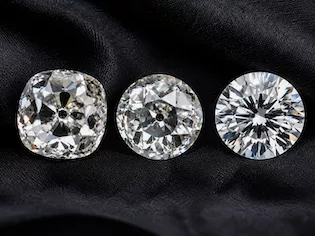
Evaluating an antique-cut diamond requires more than assigning color, clarity, and carat weight.
Historic diamonds were cut by hand using tools and techniques very different from those used today. Many have irregular outlines, high crowns, small tables, deep pavilions, broad facets, and open culets. These features may look unusual beside a modern brilliant cut, but they often create much of an antique diamond’s beauty and character.
A qualified appraiser considers the diamond as a gemstone, a historic object, and a product within a particular market. Cutting style, condition, originality, mounting, and collector demand may all affect value.
What You Will Learn
You will learn how an appraiser:
- Identifies an antique cutting style
- Measures and grades a mounted or loose diamond
- Evaluates condition, originality, and possible recutting
- Examines the mounting for evidence of age
- Selects the correct market and researches comparable sales
Identifying the Cutting Style
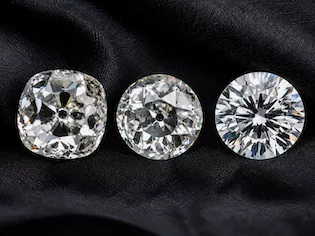
From the left, Old Mine Cut, Old European Cut, Modern Ideal Cut
The appraiser begins by studying the diamond’s outline, facet arrangement, crown, pavilion, girdle, and culet.
Possible identifications include table cuts, rose cuts, old mine cuts, old European cuts, transitional cuts, early Asscher cuts, portrait cuts, briolettes, and modern recuts.
Some diamonds combine features from more than one period. Diamond cutting evolved gradually, and cutters often shaped each stone to preserve as much weight as possible. For that reason, classification may require professional judgment rather than a rigid label.
An old mine cut commonly has a cushion-shaped or irregular outline, high crown, small table, deep pavilion, and open culet. An old European cut usually has a more rounded outline but may retain many of those same characteristics.
Measuring the Diamond
Measurements help determine shape, proportions, face-up spread, and possible cutting period.
The appraiser may record length, width, depth, table size, crown height, pavilion depth, girdle thickness, culet size, and length-to-width ratio.
Many antique diamonds carry extra weight in their depth, so they may appear smaller face-up than modern diamonds of similar weight.
When a diamond remains mounted, direct weighing may not be possible. The appraiser may estimate weight from measurements and proportions, but the report should clearly identify that weight as estimated.
Removing an antique diamond may improve grading accuracy, but removal can also expose a fragile girdle, worn prongs, or delicate antique construction to damage.
Examining the Crown, Pavilion, and Culet
Antique diamonds often have high crowns and small tables. These features can produce broad flashes of spectral color and strong visual character.
The appraiser examines crown height, table size, facet arrangement, symmetry, surface wear, and signs of repolishing.
Old mine and old European cuts often have deep pavilions and visible open culets. An open culet should not automatically be considered a defect. In many antique diamonds, it represents an important period characteristic.
The appraiser also looks for darkness, light leakage, uneven facet alignment, and signs that the pavilion or culet may have been altered later.
Evaluating the Girdle
Many antique diamonds have irregular, bruted, thin, or knife-edge girdles. These may be historically appropriate, but they can create durability concerns.
The appraiser checks for chips, bruises, abrasions, fractures, very thin areas, later faceting, and damage hidden beneath prongs or bezels.
Girdle condition can affect value, setting safety, and whether a diamond can be removed or reset without unnecessary risk.
Assessing Color
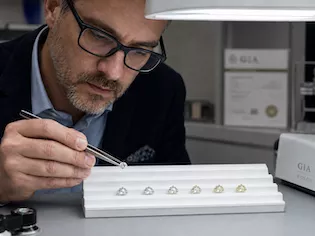
Color grading can be difficult when an antique diamond remains mounted.
Yellow or rose gold, closed-back settings, foil, dirt, oxidation, surrounding gemstones, and reflections from prongs can influence appearance.
The appraiser considers body color, face-up color, fluorescence, uneven color distribution, and mounting influence. A color estimate may need to be qualified when the mounting prevents an unobstructed examination.
Warm color may lower a diamond’s grade under conventional systems, yet still look beautiful and appropriate in a Georgian, Victorian, Edwardian, or Art Deco jewel.
Evaluating Clarity and Condition
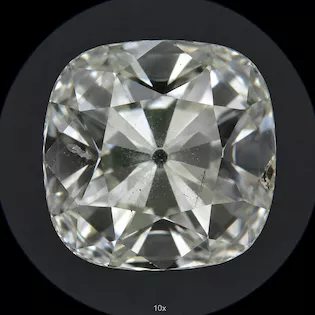
Under magnification, the appraiser examines inclusions, fractures, cavities, naturals, chips, abrasions, and surface wear.
Important questions include:
- Are inclusions visible face-up?
- Do they affect transparency?
- Do they create a durability concern?
- Are fractures surface-reaching?
- Has damage been concealed by the mounting?
- Are chips old, recent, or later polished away?
Collectors may accept certain inclusions in an attractive antique diamond, especially when the stone remains in an important original jewel. Structural weakness, however, remains significant regardless of age.
Judging Light Performance
Antique diamonds should not be judged solely by modern round brilliant standards.
Modern cuts often emphasize balanced brightness and rapid scintillation. Antique cuts may show broader, slower flashes of white and spectral light, especially under candlelight, diffused daylight, and evening lighting.
The appraiser observes brightness, fire, contrast, facet patterning, dark areas, and overall face-up character.
Mild asymmetry can contribute to antique charm. Severe asymmetry, however, may cause distracting darkness, poor balance, or durability problems.
Looking for Evidence of Recutting
Many antique diamonds have been polished, repaired, or recut during their long history.
Possible evidence includes a newly faceted girdle, inconsistent polish, modern pavilion facets, a reduced culet, changed crown proportions, freshly polished areas, or an outline that no longer fits the setting properly.
Recutting may improve appearance or remove damage, but it also reduces weight and can diminish historical integrity.
A lightly repaired antique diamond may retain most of its original character. A complete modern recut may become easier to sell commercially while losing collector appeal.
Evaluating the Mounting
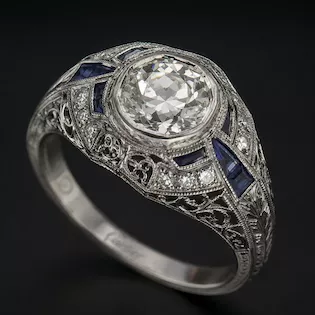
The mounting often provides valuable evidence about age, originality, and value.
The appraiser examines metal type, construction method, hallmarks, maker’s marks, setting style, engraving, repairs, wear patterns, and replacement components.
The diamond and mounting should make sense together. A stone that fits naturally, aligns with the setting, and shows consistent wear may be original to the jewel. A modern brilliant in an early setting may indicate replacement, while an old diamond in a newer mounting may represent a later reset.
In some antique jewels, design, craftsmanship, maker, and period importance may contribute as much value as the diamond itself.
Determining Originality
Originality can influence collector demand.
The appraiser considers whether the cutting style matches the mounting’s period, whether the diamond fits properly, whether wear patterns appear consistent, and whether prongs, bezels, or stone seats have been altered.
Absolute certainty may not always be possible. A responsible appraisal separates confirmed facts from professional opinion and explains the physical evidence supporting its conclusions.
Selecting the Correct Market
A diamond does not have one universal value.
Value depends on the purpose of the appraisal and the market being considered. Possible markets include antique jewelry retail, estate jewelry dealers, auctions, independent retailers, private sales, dealer wholesale, liquidation, and insurance replacement.
A rare antique diamond may perform strongly in a specialist market but receive little interest from a buyer focused on standardized modern diamonds.
The appraiser must match the type of value and market to the intended use of the assignment.
Researching Comparable Sales
Modern round brilliant price lists alone may not provide a reliable value for an antique-cut diamond.
The appraiser researches diamonds and complete jewels with similar cutting style, weight, color, clarity, shape, condition, period, maker, provenance, and market position.
Auction results, retail asking prices, dealer offers, and private sales must each be interpreted within context. Asking prices do not prove a sale, and wholesale offers reflect resale risk, repair costs, and dealer margins.
A credible appraisal relies on relevant market evidence and explains important adjustments.
Final Thoughts
No single measurement or grade tells the complete story of an antique-cut diamond.
A professional appraisal considers cutting style, period, shape, proportions, color, clarity, carat weight, face-up beauty, condition, originality, mounting, provenance, and current market demand.
A fine antique diamond combines natural rarity with the judgment and craftsmanship of an earlier cutter. Its value may lie not only in brilliance, but also in character, survival, originality, and history.
Have an Antique Diamond Evaluated Properly
Before selling, insuring, resetting, or recutting an antique diamond, have it examined by an appraiser who understands both gemology and the antique jewelry market.
Peter Indorf provides professional appraisal and consulting services for antique diamonds, period jewelry, inherited collections, estate property, and important gemstones. Each assignment begins with a complimentary short appointment to review the item, determine the scope of work, and provide a price.
Contact Peter Indorf to schedule a confidential consultation and gain a clearer understanding of your diamond’s identity, condition, market position, and value.