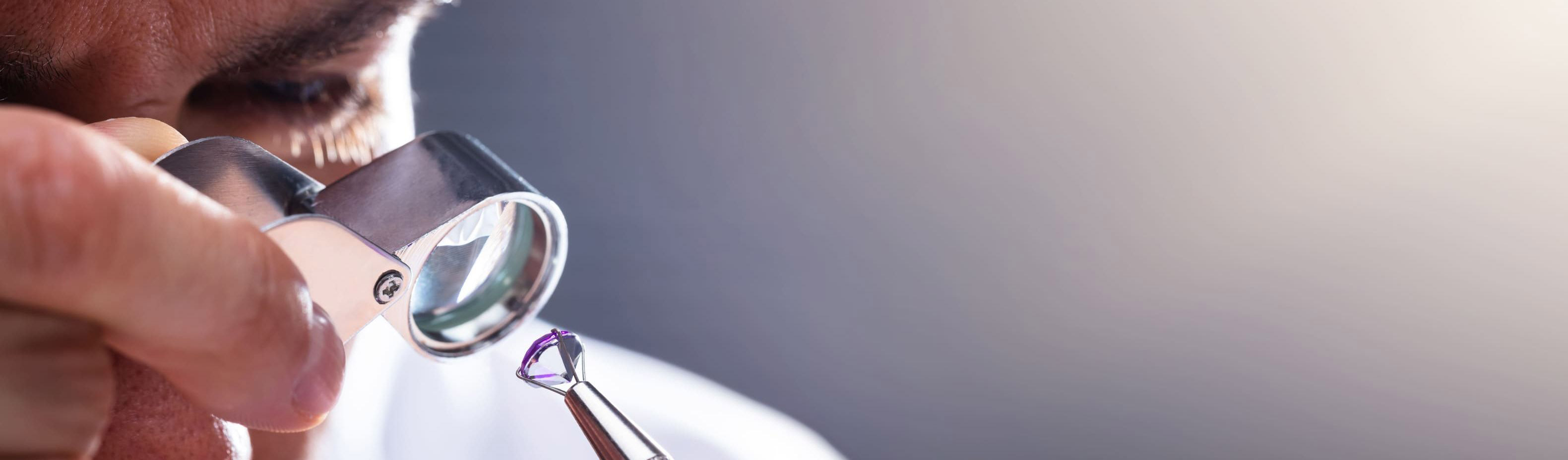
Should an antique diamond be recut—or should its original character be preserved?
That question rarely has a simple answer. Recutting may improve brilliance, symmetry, durability, and marketability, but it can also permanently remove historic faceting, reduce carat weight, and diminish collector appeal.
Before making an irreversible decision, owners should consider far more than how bright a diamond might look after cutting. Weight retention, original mounting, condition, historic importance, and likely market value all come into play.
What You Will Learn
In this article, you will learn:
- Why an antique diamond may be considered for recutting
- What improvements a successful recut may provide
- How carat-weight loss can affect value
- Why original faceting and antique character matter
- When conservative repair may be better than a complete recut
- How an original mounting can affect the decision
- When recutting may make financial sense
- When preserving the original cut may be wiser
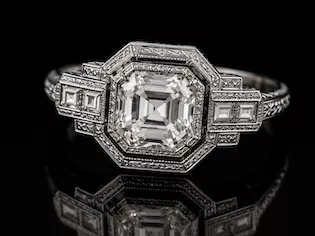
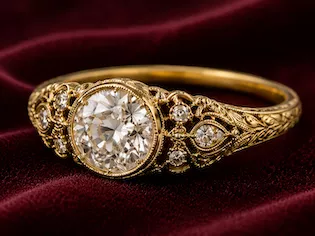
Close up of what our model is wearing
Weight Loss Can Affect Value
Every recut results in some loss of carat weight. Sometimes that loss is minor. In other cases, reshaping the diamond or correcting significant damage may require removing a meaningful amount of material.
Weight becomes especially important when a diamond sits just above a major market threshold. A stone weighing 2.03 carats, for example, could fall below 2.00 carats after recutting. Even though its appearance may improve, crossing below that threshold can reduce its per-carat value and overall market position.
For that reason, a recut should never be judged only by how much brighter the finished diamond might appear. Estimated finished weight, dimensions, color, clarity, cutting cost, and probable selling market must all be considered.
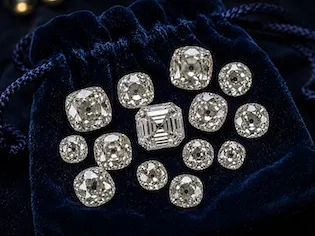
Antique Character May Be More Valuable Than Perfect Symmetry
Many of the features that give an antique diamond its charm would be considered imperfections in a modern cut.
Old mine and old European cut diamonds often have high crowns, small tables, open culets, broad facets, and slightly irregular outlines. Their symmetry may not be exact, but their larger facets can produce broad flashes of light and a soft, romantic glow.
Modernizing such a diamond may improve technical performance, but it may also make the stone less distinctive.
Collectors frequently seek originality. A well-preserved antique cut may carry value because of its age, cutting style, rarity, and connection to a particular period. Once those original facets are removed, that collector appeal may disappear.
The diamond may become easier to sell to a modern buyer while becoming less desirable to someone who values antique character.
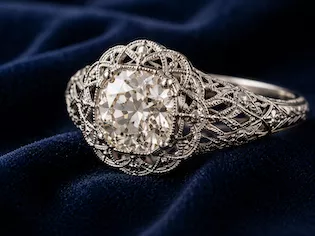
Not Every Damaged Diamond Needs a Complete Recut
A small chip or worn girdle does not always justify complete modernization.
An experienced cutter may be able to polish a damaged section, remove a minor chip, improve one limited area, or repolish abraded facets while preserving most of the original cut.
This conservative approach can reduce durability concerns without sacrificing unnecessary weight or historic character.
The distinction between damage and original cutting style is important. An open culet, irregular girdle, or slight asymmetry may be authentic features rather than defects that require correction.
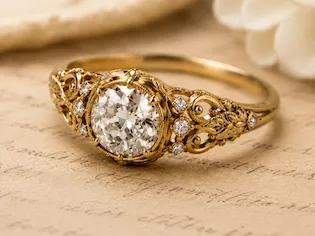
The Mounting Must Also Be Considered
An antique diamond should not always be evaluated separately from its setting.
Recutting can change diameter, depth, outline, and girdle thickness. Afterward, the diamond may no longer fit its original mounting or may look out of balance with surrounding stones.
This becomes especially important when the diamond remains in a fine period jewel, a signed piece, or a mounting with documented provenance. Altering the center stone may disturb the visual and historical integrity of the entire jewel.
In some cases, design, craftsmanship, maker, and period importance may contribute as much value as the diamond itself.
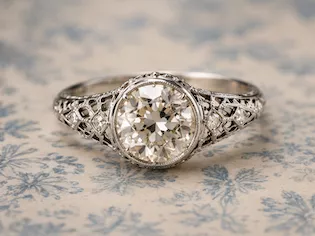
Modern Technology Helps, but It Cannot Remove Every Risk
Modern scanning and planning systems, like Sarine, allow cutters to estimate possible new shapes, finished weight, proportions, and areas of concern. They can help identify inclusions and compare several cutting options before work begins.
This technology greatly improves planning, but it cannot guarantee the outcome.
Unexpected strain, fractures, cleavage, or hidden inclusions may affect the result. A diamond may lose more weight than expected, or a previously less visible inclusion may become more noticeable after cutting.
Any projected color, clarity, or finished value remains an estimate until the work has been completed.
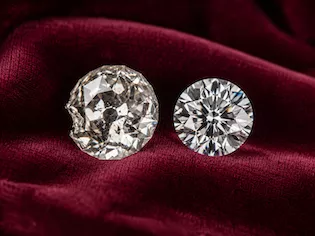
Damaged antique diamond before and after recutting to modern Ideal round brilliant cut
When Recutting May Be Appropriate
Recutting may make sense when damage threatens durability, the shape appears severely distorted, the current cut has little collector appeal, and projected improvement is substantial.
It may also be reasonable when weight loss should remain limited, the diamond has no important provenance or historic mounting, and financial analysis supports the decision.
When Preservation May Be Wiser
Preservation may offer the better choice when the diamond has an attractive antique cut, remains in its original mounting, carries documented history, or sits close to an important weight threshold.
Keeping the original cut may also be preferable when damage is minor, conservative repair is possible, or modernization would erase features that collectors value.
Final Thoughts
Recutting an antique diamond is an irreversible decision.
The best choice requires balancing brilliance, durability, weight retention, historic character, mounting integrity, collector appeal, and financial value.
Before authorizing any work, consult an independent appraiser experienced with antique diamonds and a cutter familiar with conservative repair. Ask for an estimated finished weight, expected dimensions, likely risks, and more than one cutting option.
A brighter diamond does not automatically become a more valuable diamond. In many cases, preserving a stone’s unique hand-cut personality may offer greater long-term value than making it conform to modern standards.