What You’ll Learn
If you have ever wondered what happens during a professional jewelry appraisal, this guide walks you through the process from start to finish.
You’ll learn:
- Why the purpose of the appraisal matters
- What happens during the examination process
- How metals and gemstones are identified
- How jewelry is graded and researched
- How value conclusions are developed
- What should be included in a professional appraisal report
- How to choose an experienced jewelry appraiser
Quick Answer
A professional jewelry appraisal involves far more than assigning a number to a piece of jewelry. A proper appraisal includes identification, testing, grading, market research, documentation, and a carefully supported opinion of value based on the intended purpose of the assignment.
Whether you need an appraisal for insurance, estate settlement, equitable distribution, donation, or resale planning, understanding the process helps you make informed decisions.
1. Define the Purpose of the Appraisal
Every appraisal begins with one important question:
Why do you need the appraisal?
This determines the type of value being developed.
Common appraisal purposes include:
- Insurance Replacement Value — replacing an item with one of like kind and quality
- Fair Market Value — often used for estate, probate, and tax matters
- Equitable Distribution Value — divorce and asset division
- Donation Appraisals
- Resale or Liquidation Consulting
- Collateral Lending
- Inventory Documentation
Different purposes require different valuation methods. Insurance replacement value and resale value are rarely the same.
2. Client Interview & Background Review
A professional appraiser gathers available background information, including:
- Original receipts
- Prior appraisals
- Laboratory grading reports
- Designer attribution
- Repair history
- Purchase history
- Family provenance
Documentation helps build context, but professional conclusions rely on independent examination.
3. Initial Examination
Next comes a careful visual inspection.
This step evaluates:
- Overall condition
- Structural integrity
- Wear patterns
- Previous repairs
- Alterations
- Missing stones
- Setting security
- Signs of damage
This helps determine what testing will be required.
4. Cleaning (When Appropriate)
Jewelry often arrives dirty.
Lotions, soap residue, dust, and debris can hide important details.
When safe, cleaning improves visibility.
Methods may include:
- Ultrasonic cleaning
- Steam cleaning
- Gentle hand cleaning
Some materials require caution:
- Emerald
- Opal
- Pearl
- Coral
- Antique jewelry
- Fracture-filled gemstones
Not every piece should be cleaned aggressively.
5. Identification & Authentication
This step determines exactly what you own.
Metal Analysis
The appraiser identifies:
- Gold purity (10K, 14K, 18K, 22K)
- Platinum
- Sterling silver
- Alternative alloys
Methods may include:
- Hallmark inspection
- Acid testing
- Electronic testing
- XRF analysis
Gemstone Identification
Mounted gemstones are evaluated for:
- Species
- Variety
- Natural vs synthetic origin indicators
- Simulants
- Treatments
- Measurements
- Estimated weights
Designer Attribution
When appropriate, branded pieces may be evaluated for attribution:
- Tiffany & Co.
- Cartier
- Van Cleef & Arpels
- Buccellati
- David Webb
- Ilias Lalaounis
Brand can significantly influence value.
6. Gemological Testing
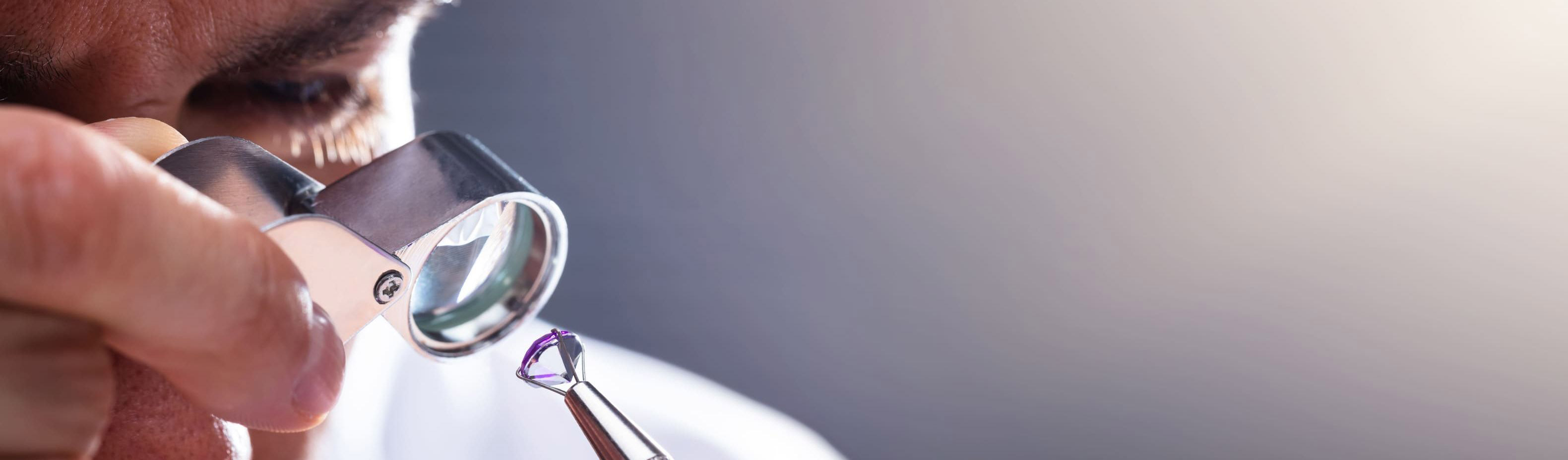
Professional gemological instruments may be used to confirm findings.
Examples include:
- Microscope
- Refractometer
- Polariscope
- Spectroscope
- UV fluorescence
- Specific gravity testing
- Thermal conductivity instruments
- Diamond screening devices
Testing helps confirm:
- Gem identity
- Treatments
- Quality indicators
- Natural vs laboratory-grown characteristics where determinable
7. Measurements & Documentation
Precise measurements are recorded.
Typical data includes:
- Ring size
- Width
- Height
- Thickness
- Gem dimensions
- Bracelet length
- Necklace length
- Total metal weight
Detailed descriptions document:
- Design style
- Manufacturing method
- Construction quality
- Hallmarks
- Gemstone details
- Condition observations
This documentation becomes part of the permanent appraisal record.
8. Grading
Quality assessment follows accepted professional standards.
Diamonds
Evaluation may include:
- Carat weight
- Color
- Clarity
- Cut
- Fluorescence
- Proportions
Colored Gemstones
Evaluation may include:
- Hue
- Tone
- Saturation
- Transparency
- Clarity
- Cut quality
- Optical phenomena
- Treatment assessment
Jewelry Craftsmanship
The appraiser also considers:
- Design execution
- Workmanship
- Condition
- Wearability
- Brand influence
- Historical importance
9. Market Research
This is where valuation becomes market-specific.
Relevant markets may include:
- Current retail replacement sources
- Competitive independent jewelers
- Estate jewelry markets
- Auction comparables
- Dealer wholesale channels
- Scrap/refining markets
- Secondary resale platforms
- Specialized branded resale markets
Market selection depends entirely on the intended use.
A resale consultation looks very different from an insurance appraisal.
10. Value Analysis
The appraiser analyzes all collected data to develop a supportable opinion of value.
Factors include:
- Precious metal content
- Gem quality
- Design merit
- Brand influence
- Condition
- Rarity
- Provenance
- Market demand
- Liquidity
- Current economic conditions
This is professional judgment supported by data—not guesswork.
11. Report Preparation
A professional appraisal report typically includes:
- Client information
- Intended use
- Intended user
- Type of value
- Effective date
- Scope of work
- Detailed description
- Methodology
- Market rationale
- Value conclusion
- Limiting conditions
- Appraiser qualifications
- Signature
A properly prepared appraisal should be clear, organized, and defensible.
12. Delivery & Review
The final step includes reviewing the findings with the client.
This may include discussion of:
- Value conclusions
- Market realities
- Insurance considerations
- Resale expectations
- Estate planning implications
An important reminder:
Insurance replacement value is not the same as resale value.
How Long Does a Jewelry Appraisal Take?
Time depends on complexity.
Approximate timelines:
Simple single-item appraisal:30–90 minutes
Complex designer, antique, or multi-item assignments:Several hours to multiple days
What Makes a Good Jewelry Appraisal?
A quality appraisal should be:
- Independent
- Transparent
- Well documented
- Purpose-specific
- Market supported
- Professionally reasoned
A number without process is simply an opinion.
A true appraisal is a professional valuation assignment.
Ready for a Professional Jewelry Appraisal?
Whether you need an appraisal for insurance, estate settlement, equitable distribution, donation, resale guidance, or liquidation planning, expert analysis matters.
Peter Indorf brings more than 50 years of experience in jewelry design, gemology, valuation, and real-world market analysis.
Appraisal services include:
- While-you-watch appraisals when appropriate
- Insurance replacement appraisals
- Fair market value appraisals
- Estate and probate valuations
- Divorce and equitable distribution appraisals
- Donation appraisals
- Resale and liquidation consulting
- Designer jewelry evaluations
- Antique and estate jewelry analysis
- Diamond, colored gemstone, and watch appraisals
Appointments available in our professional gem lab, or at your home or office when appropriate.
Call Peter Indorf today to discuss your appraisal needs.
321-863-4938
www.jewelryappraisal-liquidation.com
Know what you own. Understand what it may be worth. Make confident decisions.
FAQ
How much does a jewelry appraisal cost?
Fees vary depending on complexity, number of items, and assignment purpose. Professional appraisers typically charge by time or assignment scope—not by value.
Can I wait while my appraisal is completed?
Often, yes. Simple single-item assignments may be completed while you watch by appointment.
Is my old appraisal still valid?
Markets change. Gold, diamonds, gemstones, and branded jewelry can shift significantly over time. Older appraisals should be reviewed periodically.
Do you appraise estate and inherited jewelry?
Yes. Estate jewelry often requires fair market value analysis for probate, tax, or family distribution purposes.
Can you tell me what my jewelry would sell for?
Yes—but resale consultation requires a different valuation approach than insurance replacement appraisal.