

A GIA Laboratory report can provide detailed information about a diamond or colored gemstone. However, many consumers are surprised to discover that it does not state what the gemstone is worth.
That omission is intentional.
A GIA report identifies and grades a gemstone. A professional appraisal develops an opinion of value. These services are related, but they serve very different purposes.
Consumers should also understand another important limitation: GIA does not guarantee or warrant every finding stated in its reports. Its terms substantially limit responsibility for losses claimed by people who rely on those findings.
Note: This article uses GIA—the Gemological Institute of America—as an example because it is one of the best-known gemological laboratories. However, consumers may encounter reports from many other laboratories in the marketplace.
What You Will Learn
- What information a GIA laboratory report provides
- Why GIA does not assign monetary values
- Why one gemstone can have several legitimate values
- Whether GIA guarantees its laboratory findings
- How an appraiser should use a GIA report
- When you may need both a laboratory report and an appraisal
What Does a GIA Laboratory Report Tell You?
The Gemological Institute of America provides independent laboratory analysis for diamonds and colored gemstones.
Depending on report type, a GIA report may include:
- Natural, laboratory-grown, treated, or imitation identification
- Carat weight
- Measurements
- Shape and cutting style
- Diamond color and clarity grades
- Cut, polish, and symmetry grades
- Fluorescence
- Gemstone treatments
- Geographic-origin opinions for certain colored gemstones
- Laser inscriptions
- A plotting diagram or identifying characteristics
This information helps establish what a gemstone appears to be and describes its measurable gemological characteristics based on GIA’s examination.
A GIA report does not evaluate every factor required to determine monetary value.
Why Doesn’t GIA Assign a Dollar Value?
Value depends on much more than gemstone identity and quality.
A credible opinion of value must answer several questions:
- Why is the valuation needed?
- What type of value applies?
- Which market should be researched?
- What is the effective date?
- Is the gemstone loose or mounted?
- Does a brand, designer, provenance, or period add value?
- What condition issues affect desirability?
- How readily can the item be sold or replaced?
A laboratory cannot provide one universal dollar figure because no single value applies in every situation.
One Gemstone Can Have Several Different Values
A diamond or colored gemstone may have multiple legitimate values, depending on intended use.
Insurance Replacement Value
This value estimates the cost of replacing an item through an appropriate retail market. It may include gemstone, mounting, labor, design, taxes, and other replacement-related costs.
Fair Market Value
Fair market value may apply to estate tax, charitable donation, probate, equitable distribution, and certain legal assignments. It reflects a hypothetical transaction between informed buyers and sellers under defined conditions.
Secondary-Market Value
This value considers what a comparable item may sell for through an estate jeweler, auction house, online marketplace, or another secondary-market source.
Liquidation Value
Liquidation value reflects a sale under restricted time or market conditions. Dealer offers, immediate cash sales, and forced-sale situations may produce substantially lower results.
Each conclusion can be correct when developed for a clearly defined intended use, type of value, market, and effective date.
A GIA Report Evaluates the Gemstone—Not the Entire Piece of Jewelry
A gemstone may represent only one part of a finished piece.
An appraisal may also consider:
- Precious-metal content
- Mounting quality
- Manufacturing method
- Craftsmanship
- Condition
- Age and period
- Designer or manufacturer
- Signed provenance
- Antique or vintage desirability
- Market demand
- Replacement difficulty
- Saleability
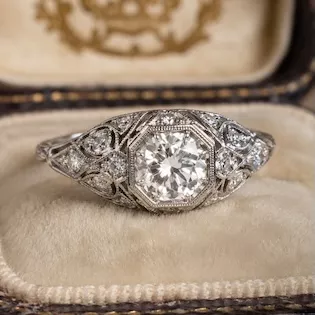
A beautifully made Art Deco platinum ring may carry value beyond its center diamond. A signed Cartier, Tiffany & Co., Van Cleef & Arpels, or Harry Winston jewel may command a premium based on authenticity, design, rarity, provenance, and market demand.
A grading report alone cannot measure those factors.
Does GIA Guarantee Its Findings?
No. A GIA laboratory report should not be interpreted as a guarantee, warranty, valuation, or promise of monetary protection.
GIA provides its observations, test results, grading opinions, and identification conclusions based on the gemstone submitted for examination. However, GIA’s published terms limit its representations, warranties, and potential liability.
This distinction matters because consumers and professionals often place substantial reliance on laboratory reports.
A GIA report may influence:
- A purchase or sale
- An appraisal conclusion
- An insurance policy
- A damage claim
- An estate valuation
- A legal dispute
- A decision to remove or reset a gemstone
- A determination concerning treatments or origin
Despite that influence, GIA does not guarantee that every conclusion will remain undisputed. Nor does a report guarantee a gemstone’s value, ownership, future marketability, or financial performance.
GIA’s terms also substantially limit remedies available to someone claiming a financial loss from reliance on a report.
In practical terms, GIA reports its findings, but it does not assume unlimited financial or legal responsibility for every subsequent use of those findings.
Will GIA Back Up Someone Who Relies on Its Report?
A consumer, jeweler, appraiser, insurer, attorney, or fiduciary should not assume that GIA will financially protect or legally defend every person who relies upon one of its reports.
A laboratory may review a disputed gemstone or report under its procedures. However, that does not mean it will accept responsibility for every loss, transaction, appraisal conclusion, or legal claim connected with use of that report.
Therefore, a GIA report should be viewed as an important source of gemological evidence—not as an unconditional guarantee.
Why This Matters to Consumers
Many consumers believe that a prestigious laboratory report transfers responsibility for gemstone identification and grading entirely to the laboratory.
That belief can create a false sense of security.
Consumers should retain:
- Original purchase documents
- Previous appraisals
- Repair and service records
- Photographs
- Laboratory reports
- Shipping records
- Gemstone measurements
- Weight information
- Laser-inscription details
- Written disclosures from sellers and jewelers
These records become particularly important when a gemstone has been removed, repaired, repolished, recut, reset, or submitted to another laboratory.
A difference in weight, measurements, treatment findings, or identifying characteristics should never be dismissed without investigation.
How Should an Appraiser Use a GIA Report?
A qualified jewelry appraiser may use a GIA report as one source of objective information.
The appraiser should then:
- Examine the gemstone and mounting
- Confirm that the report reasonably corresponds with the gemstone
- Compare weight, measurements, inscriptions, and identifying characteristics
- Evaluate condition and workmanship
- Identify maker, period, and construction
- Define intended use and type of value
- Select the appropriate market
- Research comparable items and current pricing
- Reconcile available market data
- Develop a supported opinion of value
- Prepare a written appraisal report
An appraiser should not simply copy information from a laboratory report without determining whether that information corresponds with the gemstone being examined.
A Laboratory Report Does Not Transfer Professional Responsibility
A professional appraiser remains responsible for appraisal conclusions.
That responsibility includes:
- Identification
- Description
- Condition reporting
- Market selection
- Comparable research
- Analysis
- Value conclusion
- Disclosure of assumptions and limiting conditions
A GIA report may support an appraisal conclusion, but it does not relieve an appraiser, jeweler, buyer, seller, insurer, or fiduciary of independent professional responsibility.
When findings appear inconsistent, important discrepancies should be investigated and disclosed.
Is a GIA Report a Certificate?
Consumers often call GIA reports “certificates,” but that term can create confusion.
A certificate may suggest a guarantee or legally binding assurance. A GIA laboratory report records examination results and grading conclusions. It does not guarantee value, future market performance, or what another person will pay.
Gemstone markets can change because of:
- Supply and demand
- Economic conditions
- Fashion trends
- Treatment disclosures
- Mining-origin preferences
- Laboratory-grown diamond competition
- Brand demand
- Auction activity
- Changes in retail and secondary-market pricing
A laboratory report may remain useful for identification while an appraisal value becomes outdated.
Do You Need Both a GIA Report and an Appraisal?
You may benefit from both when a gemstone has significant value or when accurate documentation matters.
A laboratory report may help establish gemstone identity, treatment, origin, or quality.
An appraisal may be needed for:
- Insurance coverage
- Estate planning
- Probate
- Equitable distribution
- Divorce
- Charitable donation
- Bankruptcy
- Collateral
- Purchase consultation
- Sale or liquidation planning
Each document answers a different question.
The Important Difference
A GIA laboratory report answers:
What gemstone was examined, and what were the laboratory’s findings and grading conclusions?
A professional appraisal answers:
What is this gemstone or jewelry item worth for a specific intended use, market, type of value, and effective date?
Neither document should be misunderstood.
A GIA report does not provide a dollar value, and it does not offer an unconditional guarantee that protects every person who relies upon its findings.
An appraisal does not replace independent laboratory testing when advanced gemstone identification, treatment detection, or origin analysis may be necessary.
Final Thoughts
A GIA report can provide valuable and influential gemological information. However, it remains a laboratory report—not an appraisal, guarantee, warranty, or promise of financial protection.
Monetary value requires professional judgment, market research, a clearly defined appraisal assignment, and analysis of the complete jewelry item.
For important diamonds, colored gemstones, watches, antique jewelry, or signed pieces, combining reliable laboratory analysis with a professionally prepared appraisal provides a far more complete picture.
Need Help Understanding a Laboratory Report or Jewelry Value?
Peter Indorf provides independent jewelry appraisal, gemological, consulting, and liquidation services for consumers, attorneys, executors, fiduciaries, and collectors.
Whether you need insurance documentation, estate valuation, purchase guidance, report review, discrepancy analysis, or an informed strategy for selling jewelry, professional analysis can help you make a confident decision.
Call our office to schedule a confidential consultation with Peter Indorf, Graduate Gemologist and Registered Gemologist Appraiser.